
Practical AI For Local Small Business:
Smarter Operations Without The Enterprise Price Tag
Local small businesses are facing a familiar squeeze. Operational costs are tight, productivity growth is flat, and everyone is expected to do more with less. But while multinational corporations chase massive, multi-million-dollar artificial intelligence overhauls, the real shift happening on the ground for small-to-medium enterprises is much more practical.
The focus right now is on lightweight, everyday AI tools that integrate directly into existing workflows to cut down administrative overhead, speed up communication, and automate routine tasks.
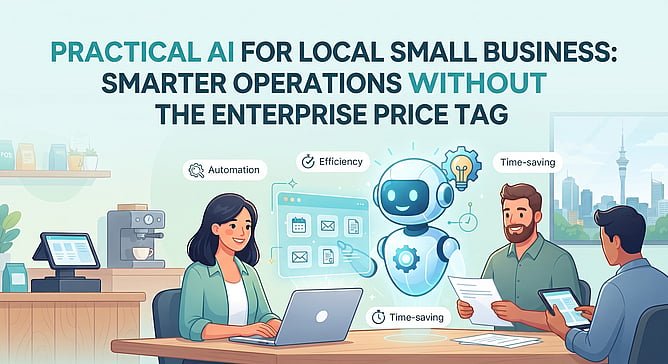
Moving Past The Hype
For most local business owners, building custom enterprise neural networks or complex machine-learning models is neither realistic nor necessary. The everyday challenges are far more mundane: answering customer enquiries after hours, sorting through an avalanche of emails, generating quick quotes, drafting social media updates, and keeping meeting notes organised.
Instead of sweeping transformations, businesses are adopting micro-solutions—features baked into modern productivity suites, lightweight automation connectors, and smart assistant tools that require zero coding and minimal setup.
Where SMEs Are Seeing Quick Wins
Administrative AutomationRoutine tasks like scheduling appointments, logging customer service tickets, and formatting raw data into client-ready reports eat up hours of valuable work time. Lightweight tools can now handle these background tasks seamlessly, freeing up staff to focus on billable work and client relationships.
Drafting And Client Communications
Writing proposals, follow-up emails, and marketing copy can stall momentum. Practical AI assistants help draft initial responses, polish customer service templates, and quickly summarise long threads, ensuring consistent communication without staring at a blank screen.
Streamlining Invoicing And Receipts
Processing paper receipts, categorising low-value expenses, and chasing accounts receivable take up unnecessary administrative cycles. Smart OCR and AI-assisted bookkeeping integrations allow businesses to process transactions automatically and flag discrepancies early.
Getting Started Without The Headache
The key to successful AI adoption for a small team isn't trying to do everything at once. It starts with identifying one or two acute bottlenecks in your day-to-day operations—such as email management or client onboarding paperwork—and testing lightweight tools that solve that specific friction point.
Technology should work quietly in the background to save you time, not create a new learning curve. If you want to explore practical ways to integrate smart automation and productivity tools into your workflow without overcomplicating your tech stack, get in touch with our team today.