
Agentic AI and hyperautomation act as force multipliers for small businesses. Instead of just answering questions, AI agents can plan steps, connect different app tools, and execute full workflows automatically without needing extra staff.
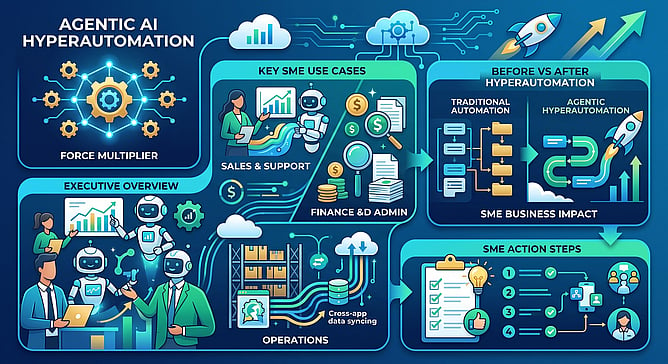
Key SME Use Cases
Sales and Support
Lead handling: Automatically qualifies leads, checks background info, updates the CRM, and sends personalized follow-ups.
Customer care: Resolves routine support tickets, processes return requests, and books meetings.
Finance and Admin
Invoicing: Tracks overdue payments, sends automated reminders, and flags discrepancies.
Expense tracking: Scans receipts, matches them with purchase orders, and inputs data into accounting software.
Operations
Inventory: Monitors stock levels across channels and drafts restock orders when supplies run low.
Data sync: Keeps spreadsheets, databases, and business apps automatically synced.
Before vs After Hyperautomation
Traditional Automation: Handles single, rigid, rule-based tasks.
Agentic Hyperautomation: Handles multi-step goals across different apps and reasons through minor exceptions.
Business Impact: Saves 10 to 15 hours per employee weekly and lets small teams perform like enterprise operations.
SME Action Steps
Map repetitive tasks where staff waste time copy-pasting data.
Turn on built-in AI tools inside your existing CRM, support, or accounting software.
Set approval rules so humans sign off on big transactions or external messages.
Scale up using simple no-code tools to connect remaining apps.